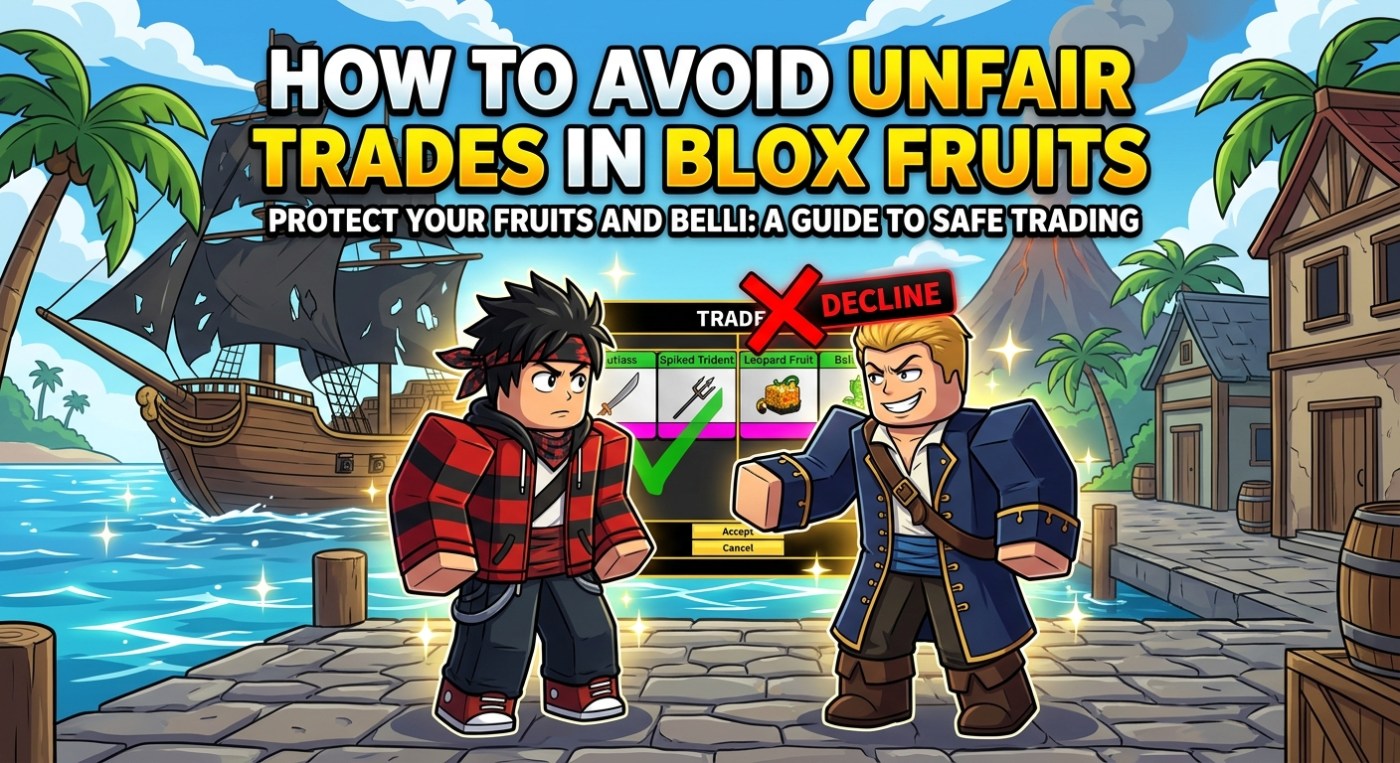
Trading is one of the most useful parts of Blox Fruits, but it’s also where new players can lose a valuable fruit in seconds. A trade may look fair because both sides contain rare items, yet rarity alone doesn’t tell you whether you’re getting a good deal.
The key is to understand the difference between in-game price and player trading value. Blox Fruits does not set an official exchange rate for fruit trades. Community demand, supply, rarity, usefulness, and current trends all affect what players are willing to give.
That makes trade knowledge important. Whether you’re trying to get a better fruit, build your inventory, or trade toward a specific goal, taking a few extra steps before accepting an offer can save you from a bad deal.
What Makes a Trade Unfair in Blox Fruits?
An unfair trade happens when the value of what you give is much higher than what you receive, based on current player demand and trading conditions.
This doesn’t always mean the other player is trying to scam you. Sometimes they simply don’t know current values. Other times, they may know that you’re new and try to take advantage of that.
There’s another issue: two fruits can have similar community values while having very different demand. A fruit may look valuable on a list but still be hard to trade because fewer players want it. Community value guides commonly separate value from demand for this reason.
Don’t Use Shop Price as Trade Value
One of the most common mistakes is looking at the Beli or Robux price and assuming that’s what the fruit is worth in a trade.
These are separate things.
The game gives fruits an in-game price, but player trading values come from the community. A fruit with a lower shop price can be far more desirable in trades than another fruit with a higher in-game price.
So before you trade, ask one simple question: “What are players giving for this item right now?”
Check Current Blox Fruits Values Before Trading
Values change over time. New updates, balance changes, new fruits, and shifts in player demand can affect the market.
That means an old video or screenshot isn’t enough.
Search for current value information before making a major trade. Some community databases track value, demand, and trends, but these figures are estimates rather than official game prices. Different sites can also show different numbers because there is no single developer-set trade value.
For bigger trades, compare more than one current source. When several sources show a similar range, you’ll have a clearer idea of the market.
Check Demand, Not Just Value
Imagine two fruits have almost the same listed trade value. One is wanted by many players, while the other sits in inventories for a long time.
Those aren’t equal from a practical trading point of view.
High demand usually means an item is easier to move in another trade. Low demand can leave you stuck with an item that looks valuable on paper but gets few serious offers.
This is why experienced traders look at both value and demand.
Understand Physical and Permanent Fruits
Another major source of bad trades is confusing physical fruits with permanent fruits.
A physical fruit is an item in your inventory that you can trade. A permanent fruit gives permanent access to that fruit on your account, so it has a very different trading value.
Community trading guides treat permanent fruits as a separate category because permanent access can carry a much higher market value than a physical copy.
Don’t accept a trade simply because the fruit names match.
A physical fruit and its permanent version aren’t automatically equal.
Watch the Trade Window Carefully
Even when you agree on a trade in chat, check everything again inside the actual trade window.
Look at every item on both sides. Confirm the exact fruit name and type. Don’t rely on what the other player said they were going to add.
This matters because a player can change an offer during negotiation. A trade that looked fair at the start may become poor after one item is removed.
Take a moment before each confirmation.
Recheck After Every Change
Suppose another player offers three fruits for yours. You review the deal and decide it’s fair.
Then they remove one fruit and add something with much lower demand.
Don’t accept the trade based on your first calculation.
Start the check again.
The offer you’re accepting is the only offer that matters.
Never Let Someone Rush You
A common warning sign is pressure.
A trader may say:
“Quick, accept.”
“Last chance.”
“Trust me.”
“Everyone trades this way.”
None of those statements tell you what the items are worth.
Good trades don’t need to happen in three seconds. Taking a few moments to check the offer is usually worth it, especially when you’re trading a rare fruit.
A player who gets angry because you want to verify the deal is giving you another reason to slow down.
Avoid Trading Outside the Game System
Be careful when someone asks you to complete part of a deal somewhere else.
For example, someone might promise to give you an item later, ask you to trade first, or suggest a deal through a Discord message that requires trust outside the normal trade system.
Community Blox Fruits trading guides warn against relying on outside arrangements and recommend completing exchanges through the game’s trading system.
The safest trade is one where you can see the full exchange before you accept it.
Don’t Trust Fake Middlemen
Be especially careful with people who claim to be official staff, trusted brokers, or “verified” middlemen.
A title in a Discord profile doesn’t prove anything.
Never hand over valuable fruits because someone says they’ll hold them and return them later. Once you give up an item outside a secure in-game exchange, recovering it may be extremely difficult.
Learn Common Blox Fruits Trading Terms
Understanding trade language can help you spot poor offers faster.
Players often use terms related to wins, losses, fair trades, demand, physical fruits, permanent fruits, and gamepasses. Community value tools may also describe an item as rising or falling in demand.
You don’t need to memorize every term. Start by understanding the basic difference between value and demand.
Value tells you how the community currently estimates an item’s trade worth. Demand tells you how strongly players want it and how easily it tends to move in trades.
That distinction can change how you view an offer.
Use a Trade Calculator as a Second Check
Manually adding several fruit values can get confusing, especially when a trade contains multiple items.
A Blox Fruits Calculator can help you compare the total values on both sides and see whether an offer is roughly balanced according to the data you’re using.
Treat the result as a guide, not a guarantee.
A calculator can compare numbers, but it can’t know exactly what another player will accept. Demand, market changes, item type, and current trading activity still matter.
Example of a Trade Check
Imagine you have a valuable fruit and another player offers several lower-value fruits.
At first glance, the number of items might make the offer look generous.
You check the current values and find that the combined offer is still well below your fruit’s estimated trade value. You also notice that one of the offered fruits has weak demand.
Now you have two reasons to pause.
The total value is lower, and part of the offer may be harder to trade later.
That’s a much better way to judge the deal than counting how many items appear on the other side.
Build a Trade Habit Before Big Deals
You don’t need to become a market expert before every trade. A simple habit is enough.
Before accepting a valuable offer, check the current value, look at demand, confirm whether items are physical or permanent, inspect every item in the trade window, and take your time before confirming.
This process takes very little time once you’re used to it.
For small trades, you may already know whether the deal makes sense. For rare fruits, gamepasses, or permanent items, a careful check becomes much more useful.
Don’t Chase a Trade Just Because It’s Rare
Rarity can attract attention, but it doesn’t automatically create demand.
A rare item that few players want can be harder to trade than a less rare item that many players are seeking.
Ask yourself what you plan to do after the trade.
Are you going to use the fruit? Are you trying to trade it again? Are you collecting it? Does the item fit your goal?
A trade can be mathematically close and still be a poor fit for what you’re trying to achieve.
What to Do When You’re Unsure
Sometimes you’ll look at an offer and still feel uncertain.
That’s your signal not to accept yet.
Take another look at the current values. Check demand. Search for recent trade examples. Ask experienced players who aren’t involved in the transaction. Then return to the offer with more information.
There’s no reward for accepting a trade before you’re ready.
Walking away is also an option. You can always look for another trader.
Final Thoughts on Avoiding Unfair Blox Fruits Trades
Good trading starts with patience.
Don’t judge an offer by fruit rarity, shop price, or the number of items alone. Check current community values, pay attention to demand, understand the difference between physical and permanent items, and inspect the final trade window before accepting.
Most of all, don’t let another player rush your decision.
Blox Fruits trading is based on a changing player market, so no value list can guarantee what an item will trade for at a given moment. Use current data as a guide, compare the actual offer in front of you, and make sure you understand both sides before confirming.
A few seconds of careful checking can protect an inventory that took you hours to build.


Leave a comment